ictPrep | The Ultimate Edexcel & Cambridge ICT Learning Hub
Chapter 1: Digital Devices
Explore the digital devices used in everyday life and at work, from computers, laptops and tablets to smartphones, games consoles and smart TVs.
This chapter covers how each device is used, what its main features are, and how to choose the right one for a task.
You’ll also learn about input, output and storage devices, how devices connect to each other, and the advantages and limitations of each.
It is a key foundation for the rest of your Edexcel IGCSE ICT course.
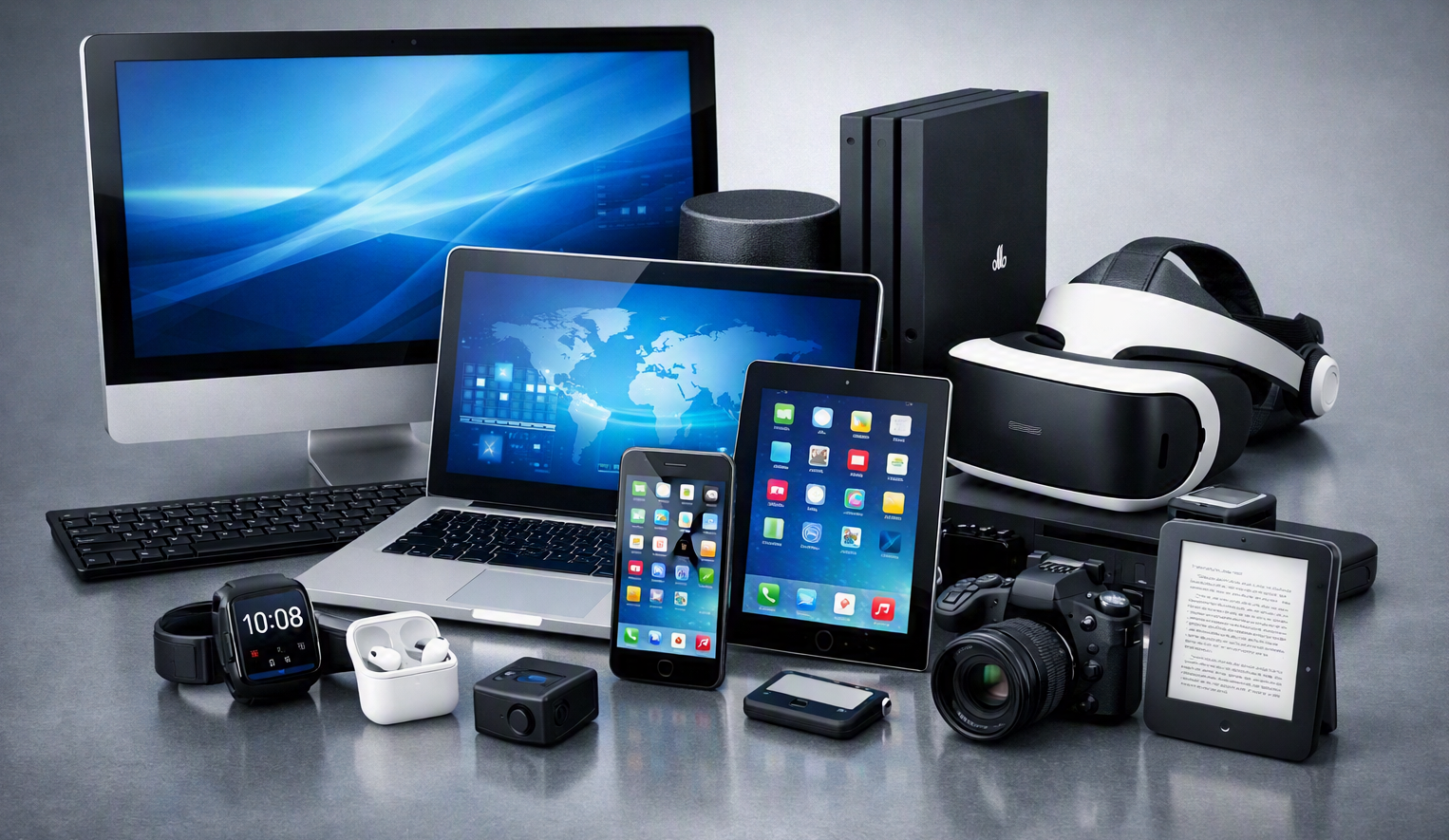
What is a digital device?
A digital device is an electronic device that uses digital data to perform tasks. Digital data is represented using binary digits (bits), which have the values 0 and 1.
Digital devices can be designed to input, process, output, and store data. For example, when you take a photograph using a smartphone:
- Input: The camera captures the image.
- Processing: The device processes the image data.
- Output: The photograph can be displayed on the screen.
- Storage: The image can be saved in the device’s storage.
How do digital devices work?
Most digital devices follow a basic Input → Processing → Output cycle. Many devices also use storage to save data and information for later use.
Ready to explore?
Don’t just learn the names of digital devices — discover how they work, why they are useful, and how they are changing our world.
Explore the sections below, test your knowledge, and build the confidence you need for your Edexcel IGCSE ICT exam!
What will you learn?
Chapter 1 – Digital devices consists of 3 main topics as follows: